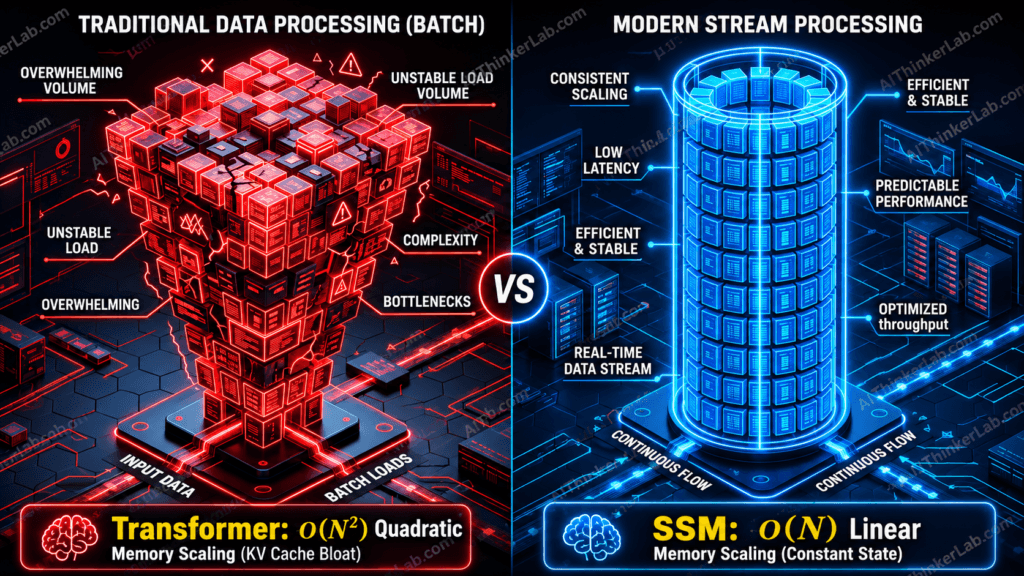
Transformers vs State Space Models: 5 Key Differences
In a world where data reigns supreme, the tools we use to interpret and manipulate it are continually evolving. Imagine being armed with the ability to anticipate market trends, optimize complex systems, or even predict natural phenomena with impressive accuracy. This is the promise of advanced computational models that harness the power of cutting-edge technology to revolutionize our understanding of data dynamics. At the forefront of this innovation are two stalwarts of the machine learning landscape: transformers and state space models. Each offers a unique lens through which we can decode the intricate tapestry of information that surrounds us.
The clash of transformers vs state space models presents a fascinating paradigm shift in data analysis. These methodologies, while diverse in their approaches, are both fundamental in redefining how we interact with massive datasets. Transformers, with their unparalleled capability to process sequential data, have gained prominence for their role in natural language processing and more recently, in handling time series data. On the other hand, state space models provide a mathematical framework that is revered for its ability to describe a system’s temporal properties in a structured manner. As we delve deeper into their comparative dynamics, prepare to discover how these models are setting unprecedented benchmarks in data-driven innovation.
Transformers vs State Space Models: 5 Key Differences Read More »