Applied AI: Guides & Tutorials

Navigate the practical side of artificial intelligence (AI) with our Applied AI: Guides & Tutorials category. From step-by-step tutorials on implementing machine learning models to hands-on guides for deploying AI solutions, discover actionable insights to bring AI concepts to life in real-world applications.

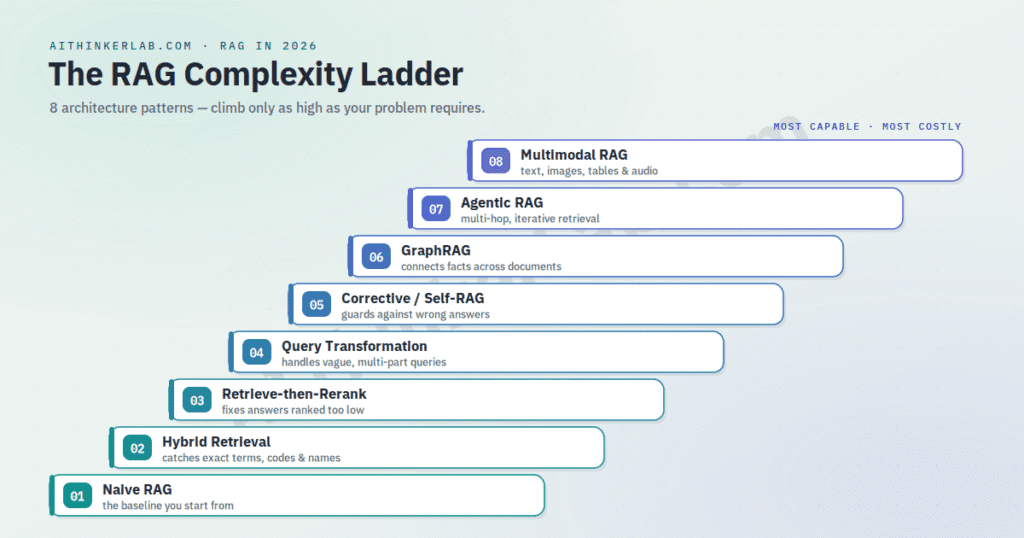
Build RAG Systems 8 patterns ladder

How to Build RAG Systems in 2026: 8 Architecture Patterns

Picture this: it’s 2026, and the landscape of technology has evolved drastically. Innovations are emerging at lightning speed, transforming industries and redefining how we approach problem-solving. Amidst this technological revolution, the need to build RAG systems—Resilient, Agile, and Governable—has become more critical than ever. These systems are not just about keeping up with advancements; they’re about leveraging them to create solutions that can withstand the test of time, adapt swiftly to change, and operate within a strong governance framework. If you’re aiming to stay ahead of the curve, understanding how to implement these architecture patterns is key.

In this ever-changing digital era, the architecture patterns you choose can make or break your system’s performance. Drawing from futuristic strategies, this blog post delves into eight cutting-edge architectural patterns that will empower you to build RAG systems effectively. These patterns are tailored to meet the demands of 2026, ensuring your systems are not only resilient but also capable of responding to unforeseen challenges with agility. Whether you’re an IT enthusiast or a seasoned architect, this guide will provide you with the insights needed to navigate the complexities of modern system design. So, let’s embark on this journey to future-proof your architectures!

How to Build RAG Systems in 2026: 8 Architecture Patterns Read More »

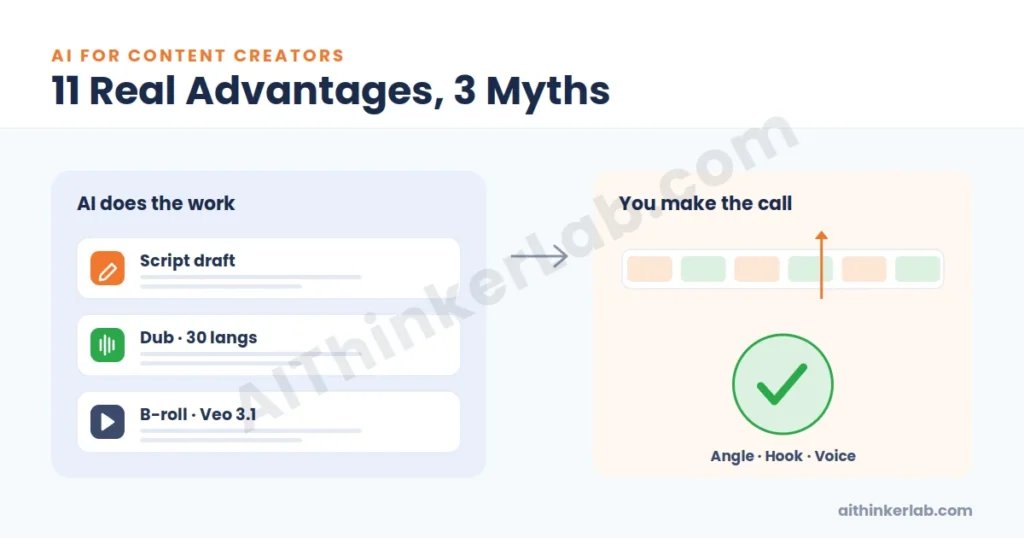
AI for content creators: split desk showing AI tools on one side and a human making the final edit on the other.

AI for Content Creators: 11 Real Advantages, 3 Myths

In a world where the lines between technology and creativity are constantly blurring, the marriage of art and innovation is taking center stage. Imagine being able to harness the power of artificial intelligence to elevate your content creation to unprecedented heights. This is no longer a futuristic fantasy but a rapidly unfolding reality. AI for content creators is revolutionizing the way we think about and produce creative work, offering tools that not only enhance our artistic capabilities but also expand the horizons of what’s possible. With the advent of AI, the canvas of creativity has become boundless, inviting you to explore its depths.

Consider this: how would your creative process transform if you had a partner that never tires, one that learns from your preferences, suggests ideas, and even anticipates your needs? AI is doing just that—acting as a collaborator rather than a replacement. From generating innovative ideas to refining complex narratives, AI is reshaping the landscape of content creation. As we delve into the intersection of technology and artistry, it’s time to unlock the true potential of AI and discover how it can amplify your creative expression like never before. Are you ready to redefine your creative boundaries? Let’s explore where art meets innovation.

AI for Content Creators: 11 Real Advantages, 3 Myths Read More »

AI for Content Creators in 2026

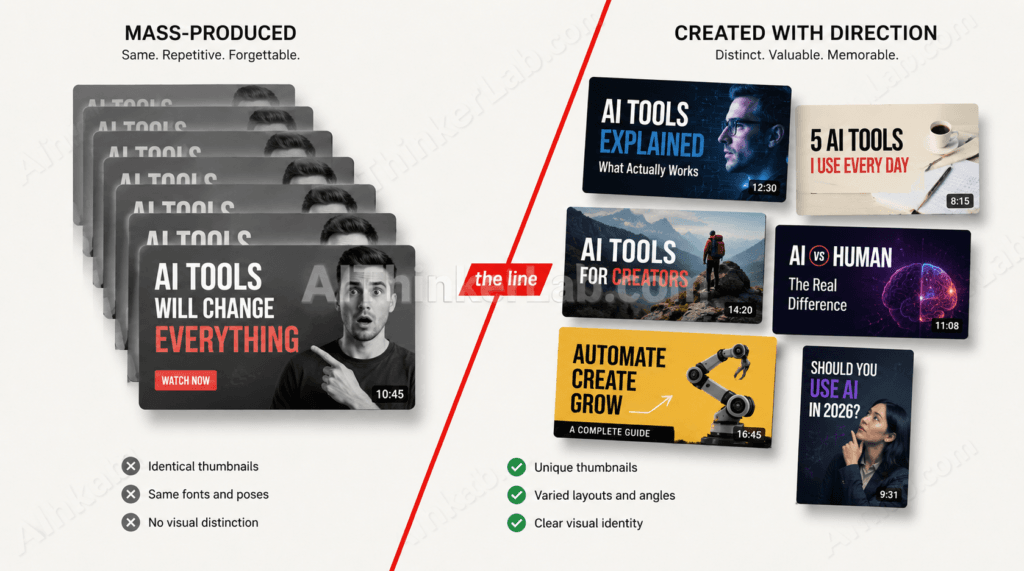
AI for Content Creators in 2026: What Works, What’s Banned (Complete Guide)

Imagine a world where AI seamlessly crafts compelling narratives, curates striking visuals, and even anticipates the ever-changing tastes of global audiences—all before creators even lift a finger. As we look toward the horizon of 2026, this isn’t just a futuristic fantasy but a looming reality that promises to redefine the very essence of content creation. The landscape is evolving at a breathtaking pace, and the role of AI for content creators in 2026 is poised to be more transformative than ever.

The advancements in AI technology are not merely tools but are becoming collaborative partners, paving the way for unprecedented creativity and efficiency. In 2026, content creators will leverage AI to break through traditional barriers, innovating in ways previously thought impossible. This shift will bring about a new era of personalized content, crafted with precision to engage and resonate with diverse audiences. Join us as we explore the emerging trends and uncover the exciting possibilities that await in the future of AI-driven content creation.

AI for Content Creators in 2026: What Works, What’s Banned (Complete Guide) Read More »

Qwen 3.6 27B vs Gemma 4 31B

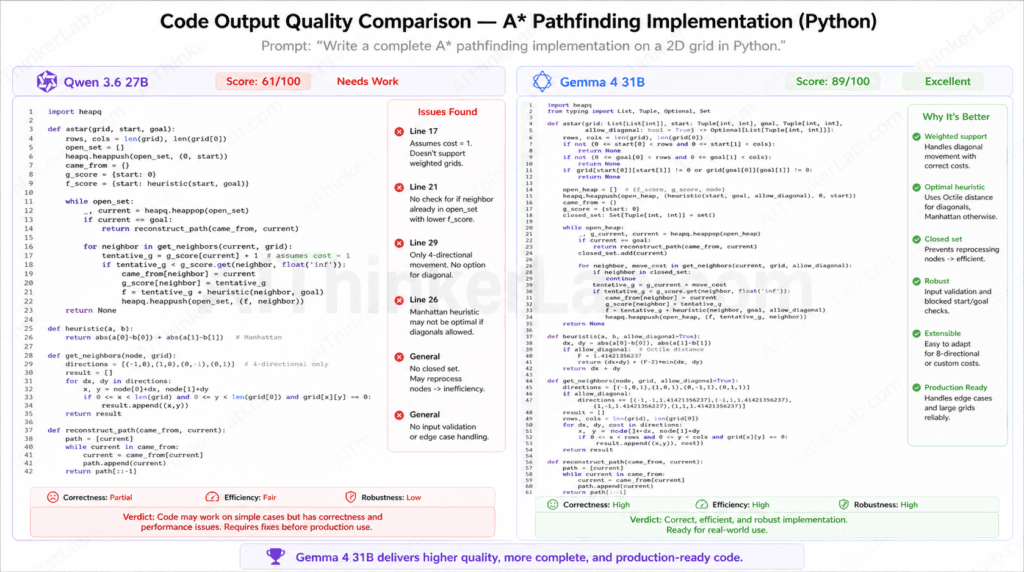
We Tested Qwen 3.6 27B vs Gemma 4 31B on 500 Game Dev Prompts — The Winner Wasn’t Who We Expected

In the ever-evolving world of artificial intelligence, showcasing the prowess of large language models has become akin to the ultimate tech showdown. Imagine setting two AI titans against each other in a fierce competition to determine supremacy in creativity, accuracy, and problem-solving. That’s exactly what we embarked upon when we tested Qwen 3.6 27B vs Gemma 4 31B across 500 game development prompts. The results were nothing short of surprising, defying our preconceived notions about each model’s capabilities.

As AI continues to infiltrate various fields, including entertainment and game design, our curiosity led us to scrutinize just how these advanced models perform under pressure. Which model would better understand intricate gaming scenarios and which would showcase innovation? Each prompt presented an opportunity for these AI models to shine—or stumble—in their approach to crafting compelling narratives, deciphering complex instructions, or spawning unique game concepts. Fasten your seatbelts as we delve into a head-to-head analysis, revealing unexpected insights that could reshape our understanding of AI potential in creative domains.

We Tested Qwen 3.6 27B vs Gemma 4 31B on 500 Game Dev Prompts — The Winner Wasn’t Who We Expected Read More »

Run Claude AI locally

Can You Run Claude Locally in 2026? Real Answer + Workarounds

In today’s rapidly advancing tech landscape, there’s an undeniable allure to the idea of having cutting-edge AI tools right at your fingertips. Imagine transforming your personal computer into a powerhouse capable of running sophisticated artificial intelligence models with ease. Yet, for many, the common hurdle remains: how can one effectively run Claude AI locally without getting entangled in a web of technical complexities? In this guide, we’ll unravel the mystery, offering a step-by-step approach to setting up Claude AI on your local machine, along with exploring viable alternatives.

As we navigate through 2026, the need for seamless, locally-run AI applications is more pertinent than ever. Whether you’re driven by the desire for enhanced privacy, faster processing speeds, or simply more control over your projects, the ability to run Claude AI locally presents a myriad of benefits. Yet, this compelling option also raises intriguing questions about accessibility and efficiency. Join us as we delve into this comprehensive setup guide, designed to empower enthusiasts and professionals alike in harnessing the full potential of Claude AI.

Can You Run Claude Locally in 2026? Real Answer + Workarounds Read More »

AI accessibility tools for blind users

9 Best AI Tools for Blind Users in 2026 (Free + Paid, Tested)

Imagine waking up in a world where the vibrant hues of a sunrise remain a mystery, and navigating a bustling city feels akin to solving a complex puzzle every day. For many people who are blind, this is the reality. Yet, as technology leaps forward, the landscape of independence and capability is being redefined in ways that were once unthinkable. Enter 2026, a time when AI accessibility tools for blind users have transformed daily life into an empowering experience filled with possibilities and newfound freedom.

In this journey of technological marvels, we explore nine groundbreaking tools that have become life-changing allies for blind individuals. These innovations aren’t just about convenience; they embody a revolution in accessibility, weaving artificial intelligence seamlessly into the tapestry of everyday existence. From smart glasses that narrate the world to apps that can guide you effortlessly through crowded spaces, these tools are not just changing lives—they are enhancing the human experience, turning what was once a challenge into a realm of opportunity.

9 Best AI Tools for Blind Users in 2026 (Free + Paid, Tested) Read More »

Lovable AI security vulnerabilities vibe hacking featured image

Lovable AI Security Vulnerabilities: 16 Flaws Exposed via Vibe Hacking

In an era where artificial intelligence is seamlessly woven into the fabric of our daily lives, the notion of “lovable” AI might evoke images of helpful virtual assistants or efficient data processors. However, beneath this appealing exterior, there lie security vulnerabilities that could compromise the very systems we rely on. Enter the world of vibe hacking—a novel and somewhat controversial method that has recently uncovered a startling array of 16 AI security flaws. This intriguing technique pokes at the soft underbelly of AI systems, revealing how easily they can be misled or manipulated in ways that could have far-reaching consequences.

Consider for a moment the potential impact: from personal data breaches to the manipulation of essential services, these lovable AI security vulnerabilities could spell disaster if left unchecked. As we delve into the realm of vibe hacking, we’ll explore how these vulnerabilities were exposed and what they mean for the future of AI development. Join us on this captivating journey into the less-discussed vulnerabilities of AI, not just to understand the risks but to better prepare for a future where AI plays an even more critical role in our world.

Lovable AI Security Vulnerabilities: 16 Flaws Exposed via Vibe Hacking Read More »

Run AI models locally and offline on a laptop with no internet connection

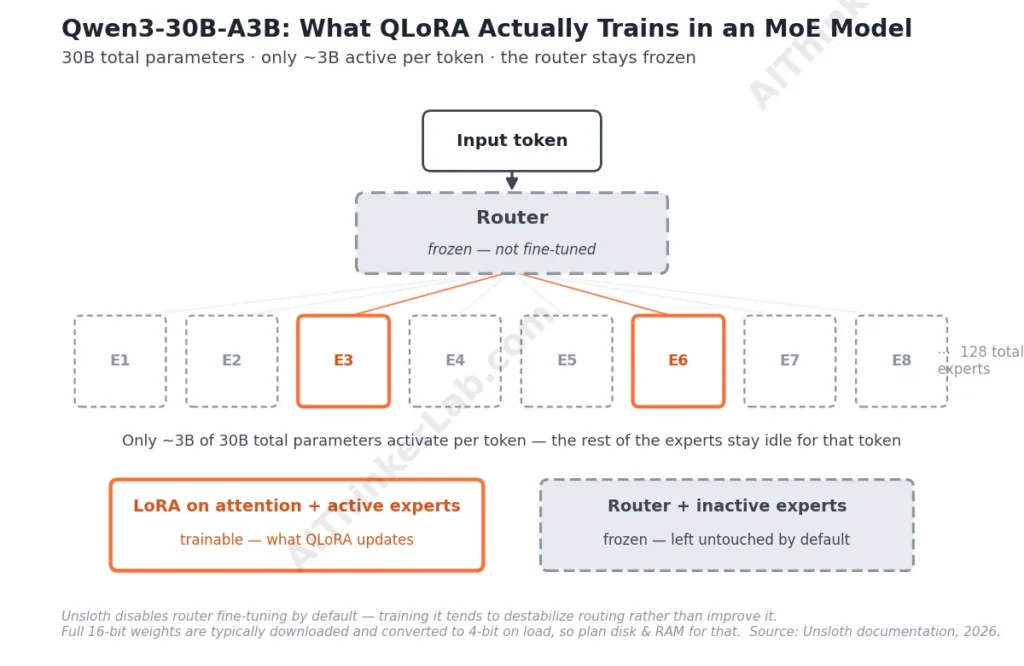
How to Run AI Models Locally & Offline in 2026 (8 Tested Tools + Best Models)

📌 Key Takeaways Introduction Every prompt you send to a cloud chatbot leaves your machine. According to the Cisco 2025 Data Privacy Benchmark Study, data privacy is now a top concern for most organizations using generative AI — and the reasons are concrete, not abstract. In 2023, Samsung banned internal ChatGPT use after engineers pasted

How to Run AI Models Locally & Offline in 2026 (8 Tested Tools + Best Models) Read More »

Top 7 AI system prompts revealed from ChatGPT Claude Grok Perplexity Copilot Gemini and DeepSeek analyzed from FreeDomain and OpenClaw GitHub projects 2026

Top 7 AI System Prompts Revealed: FreeDomain & OpenClaw GitHub Projects Analysis 2026

In an era where technology incessantly reshapes the way we live and work, the infusion of artificial intelligence into creative processes marks a groundbreaking leap forward. AI system prompts, once merely a tool for efficiency, are now at the forefront of fostering innovation and artistic expression. Imagine a world where writers, artists, and designers can collaborate with intelligent systems to push the boundaries of their imagination, exploring realms that were previously unreachable. This is not a distant dream but a present reality, where the synergy between human creativity and AI is crafting new possibilities and redefining what it means to be ‘creative.’

As we delve deeper into this fascinating intersection, it’s worth contemplating how AI system prompts are revolutionizing various industries by enhancing human ingenuity rather than replacing it. From generating unique story plots to creating mesmerizing digital art or even composing music that resonates deeply with our emotions, these prompts are no longer just about solving problems but about sparking inspiration. Join us as we explore the top innovations that are setting the stage for a creative renaissance, one driven by AI’s potential to expand the horizons of human thought and creativity.

Top 7 AI System Prompts Revealed: FreeDomain & OpenClaw GitHub Projects Analysis 2026 Read More »

Google Sequential Attention

Google Sequential Attention (2026): The New Efficiency Breakthrough Explained

In a world where digital information bombards us from every angle, the challenge of extracting meaningful insights efficiently has never been more pressing. Just when it seemed that technological innovations had reached a plateau, Google Sequential Attention emerges as a groundbreaking stride forward. Imagine a world where data is not only processed but understood, with lightning-fast precision and relevance. This isn’t just about speeding up search queries; it’s about transforming how machines interpret the complexities of language and context, drawing us one step closer to seamless human-computer interaction.

Google Sequential Attention (2026) is poised to redefine the boundaries of machine learning, promising enhanced capabilities that could reshape industries. With this new framework, Google aims to tackle long-standing inefficiencies, promising a new era where algorithms anticipate needs rather than merely respond to them. Picture a future where your digital assistant not only finds what you ask for but also intuitively understands what you might need next. This isn’t science fiction—it’s a glimpse into the powerful potential of Google’s latest technological marvel. As we delve deeper into this innovation, prepare to be amazed by the possibilities that lie ahead.

Google Sequential Attention (2026): The New Efficiency Breakthrough Explained Read More »