Navneet Bhalodiya

Navneet Bhalodiya is the founder and editor of AIThinkerLab, an AI-focused publication covering practical AI tools, content automation, enterprise strategy, and cybersecurity. He builds his own WordPress plugins and self-hosted automation workflows to test what he writes about, and is known for detailed, numbers-driven guides aimed at content creators and small teams adopting AI without the hype.

Anthropic rejects Pentagon AI contract 2026 showing break between AI company and U.S. military

Anthropic Rejects Pentagon AI Contract: Why This 2026 Decision Reshapes AI Ethics

In an era where artificial intelligence is redefining boundaries across industries, the decision by Anthropic to reject a Pentagon AI contract sends ripples through both the tech and ethical landscapes. This bold move, set against the backdrop of increasing scrutiny over AI’s role in military applications, raises profound ethical questions about the intersection of technology and warfare. As we navigate this pivotal moment in 2026, it prompts us to reconsider the responsibilities tech companies bear when faced with lucrative yet morally complex government contracts. It’s a decision that not only shapes Anthropic’s future but also challenges the entire tech industry to introspect and redefine its ethical compass.

The significance of this decision can’t be understated. As AI continues to integrate into daily life and global defense strategies, the choices made by pioneering companies like Anthropic hold sway over how these technologies will evolve ethically. In choosing principle over profit, Anthropic is casting a spotlight on the ethical dilemmas that accompany advancements in AI, setting a precedent for other companies grappling with similar moral quandaries. By rejecting a potentially lucrative Pentagon AI contract, Anthropic is not just shaping its own narrative; it is reshaping the dialogue on AI ethics, urging stakeholders worldwide to pause and reflect on the kind of future AI they wish to create.

Anthropic Rejects Pentagon AI Contract: Why This 2026 Decision Reshapes AI Ethics Read More »

Lovable AI security vulnerabilities vibe hacking featured image

Lovable AI Security Vulnerabilities: 16 Flaws Exposed via Vibe Hacking

In an era where artificial intelligence is seamlessly woven into the fabric of our daily lives, the notion of “lovable” AI might evoke images of helpful virtual assistants or efficient data processors. However, beneath this appealing exterior, there lie security vulnerabilities that could compromise the very systems we rely on. Enter the world of vibe hacking—a novel and somewhat controversial method that has recently uncovered a startling array of 16 AI security flaws. This intriguing technique pokes at the soft underbelly of AI systems, revealing how easily they can be misled or manipulated in ways that could have far-reaching consequences.

Consider for a moment the potential impact: from personal data breaches to the manipulation of essential services, these lovable AI security vulnerabilities could spell disaster if left unchecked. As we delve into the realm of vibe hacking, we’ll explore how these vulnerabilities were exposed and what they mean for the future of AI development. Join us on this captivating journey into the less-discussed vulnerabilities of AI, not just to understand the risks but to better prepare for a future where AI plays an even more critical role in our world.

Lovable AI Security Vulnerabilities: 16 Flaws Exposed via Vibe Hacking Read More »
Run AI models locally and offline on a laptop with no internet connection

How to Run AI Models Locally & Offline in 2026 (8 Tested Tools + Best Models)

📌 Key Takeaways Introduction Every prompt you send to a cloud chatbot leaves your machine. According to the Cisco 2025 Data Privacy Benchmark Study, data privacy is now a top concern for most organizations using generative AI — and the reasons are concrete, not abstract. In 2023, Samsung banned internal ChatGPT use after engineers pasted

How to Run AI Models Locally & Offline in 2026 (8 Tested Tools + Best Models) Read More »

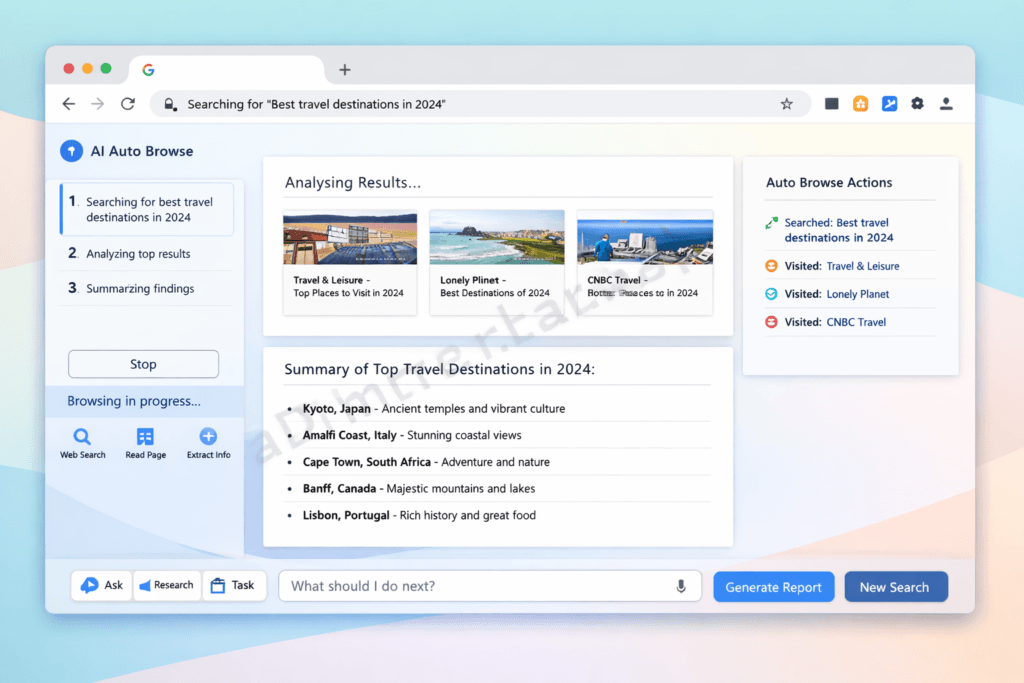
Chrome AI auto browse agentic AI interface in Google Chrome browser

Chrome AI Auto Browse : How Google’s Agentic AI Automates Your Web Tasks

Imagine a world where mundane web tasks no longer require your constant attention. Picture a digital assistant so advanced, it can intuitively comprehend and execute your online chores with the flick of a command. In 2026, this vision is becoming a reality with the advent of Chrome AI Auto Browse. Google’s latest innovation promises to revolutionize our interaction with the web, making browsing not just smarter but truly agentic. As technology continues to evolve rapidly, this groundbreaking tool aims to tackle one of our perennial pain points—time-consuming digital drudgery.

Chrome AI Auto Browse is set to reimagine efficiency by automating everyday tasks like checking emails, scheduling appointments, or even compiling research data. But it’s not just about saving time; it’s about enhancing the quality of our digital experiences. Imagine a browser that learns your habits, predicts your needs, and adjusts in real-time to make your online journey seamless. As we delve into the intricacies of this cutting-edge technology, you’ll discover how Google’s new agentic AI is designed to empower users, allowing them to focus on what truly matters. Welcome to the future of digital browsing.

Chrome AI Auto Browse : How Google’s Agentic AI Automates Your Web Tasks Read More »

Perplexity Sidebar: 30-Day Review, Setup, and How to Hide It

Imagine a tool that seamlessly fits into your daily workflow, offering you more than just convenience, but a significant boost in productivity. What if every web search could morph into a powerhouse of information without the usual detours and distractions? Enter the Perplexity Sidebar Chrome Extension—a game-changer in the realm of digital productivity. This ingenious extension redefines how we interact with information online by bringing everything you need right to your browser’s sidebar. No more endless tabs or lost time switching between applications; it’s all there at a glance, ready to propel you into newfound efficiency.

In our fast-paced digital world, where every second counts, finding ways to streamline tasks is not just a preference, but a necessity. The Perplexity Sidebar Chrome Extension has been designed with this exact purpose in mind—to eliminate the clutter and focus on what truly matters. By integrating seamlessly into your Chrome browser, it transforms the way you gather and utilize information, allowing you to concentrate on delivering results instead of getting lost in the process. This blog post will unravel the unique features of this extension, showing you how it can become an invaluable ally in your journey toward peak productivity.

Perplexity Sidebar: 30-Day Review, Setup, and How to Hide It Read More »

Top 7 AI system prompts revealed from ChatGPT Claude Grok Perplexity Copilot Gemini and DeepSeek analyzed from FreeDomain and OpenClaw GitHub projects 2026

Top 7 AI System Prompts Revealed: FreeDomain & OpenClaw GitHub Projects Analysis 2026

In an era where technology incessantly reshapes the way we live and work, the infusion of artificial intelligence into creative processes marks a groundbreaking leap forward. AI system prompts, once merely a tool for efficiency, are now at the forefront of fostering innovation and artistic expression. Imagine a world where writers, artists, and designers can collaborate with intelligent systems to push the boundaries of their imagination, exploring realms that were previously unreachable. This is not a distant dream but a present reality, where the synergy between human creativity and AI is crafting new possibilities and redefining what it means to be ‘creative.’

As we delve deeper into this fascinating intersection, it’s worth contemplating how AI system prompts are revolutionizing various industries by enhancing human ingenuity rather than replacing it. From generating unique story plots to creating mesmerizing digital art or even composing music that resonates deeply with our emotions, these prompts are no longer just about solving problems but about sparking inspiration. Join us as we explore the top innovations that are setting the stage for a creative renaissance, one driven by AI’s potential to expand the horizons of human thought and creativity.

Top 7 AI System Prompts Revealed: FreeDomain & OpenClaw GitHub Projects Analysis 2026 Read More »

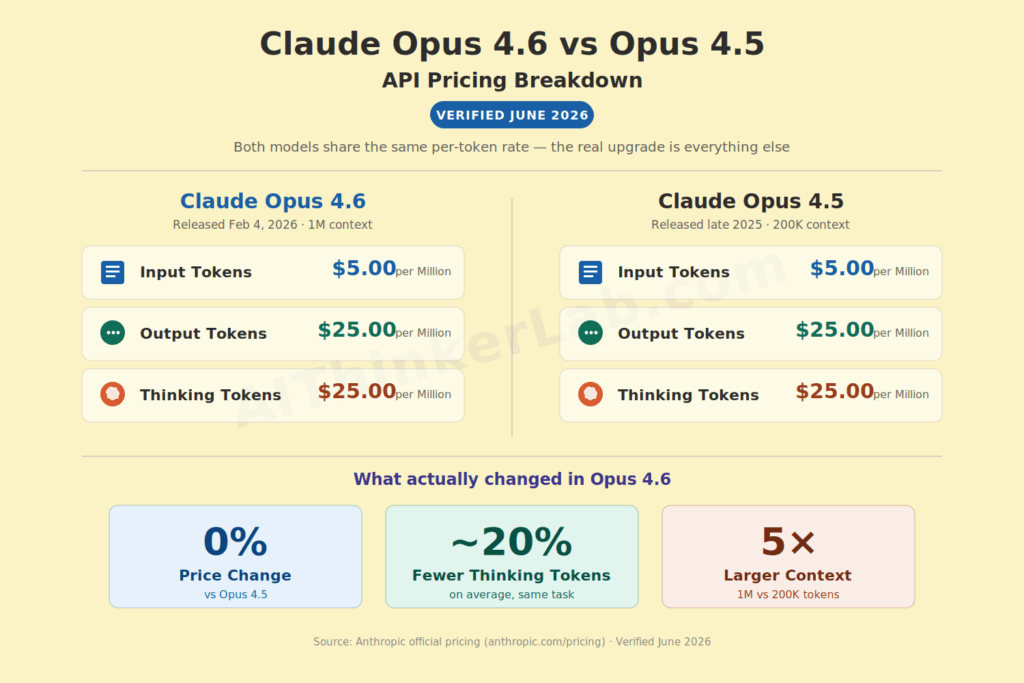
Claude Opus 4.6 vs Opus 4.5 API pricing comparison — both $5 input / $25 output per million tokens, with Opus 4.6 offering 20% fewer thinking tokens and 5× larger context. Verified June 2026.

Claude Opus 4.6 vs Opus 4.5: Benchmarks, Real Pricing, and Whether the Upgrade Is Worth It (2026)

In the rapidly evolving world of artificial intelligence, even the slightest advancements can lead to groundbreaking changes in performance and capabilities. With the release of Claude Opus 4.6, many in the tech community are buzzing with excitement and curiosity. How does it stack up against its predecessor, the Opus 4.5? This latest version promises not only improved benchmarks but also innovative features that could redefine adaptive thinking in AI applications.

As we delve into the nitty-gritty of Claude Opus 4.6 vs. Opus 4.5, get ready to explore a detailed comparison of their performance metrics and pricing strategies. Whether you’re a seasoned AI enthusiast or a curious newcomer, understanding the differences between these two versions will provide critical insights into the future of machine learning technologies. Prepare to discover what sets the Opus 4.6 apart and why it might just be the upgrade you didn’t know you needed.

Claude Opus 4.6 vs Opus 4.5: Benchmarks, Real Pricing, and Whether the Upgrade Is Worth It (2026) Read More »

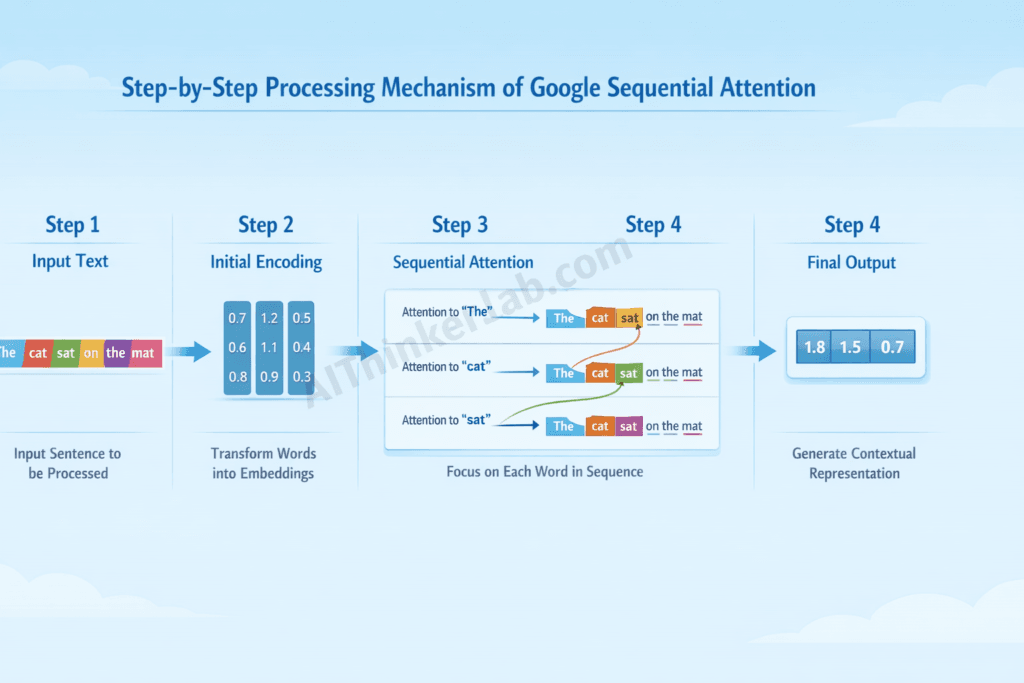
Google Sequential Attention

Google Sequential Attention (2026): The New Efficiency Breakthrough Explained

In a world where digital information bombards us from every angle, the challenge of extracting meaningful insights efficiently has never been more pressing. Just when it seemed that technological innovations had reached a plateau, Google Sequential Attention emerges as a groundbreaking stride forward. Imagine a world where data is not only processed but understood, with lightning-fast precision and relevance. This isn’t just about speeding up search queries; it’s about transforming how machines interpret the complexities of language and context, drawing us one step closer to seamless human-computer interaction.

Google Sequential Attention (2026) is poised to redefine the boundaries of machine learning, promising enhanced capabilities that could reshape industries. With this new framework, Google aims to tackle long-standing inefficiencies, promising a new era where algorithms anticipate needs rather than merely respond to them. Picture a future where your digital assistant not only finds what you ask for but also intuitively understands what you might need next. This isn’t science fiction—it’s a glimpse into the powerful potential of Google’s latest technological marvel. As we delve deeper into this innovation, prepare to be amazed by the possibilities that lie ahead.

Google Sequential Attention (2026): The New Efficiency Breakthrough Explained Read More »

AI Writes 100% of Code

AI Writes 100% of Code by 2026: Impact on Developer Careers

Imagine a world where the painstaking task of coding is no longer a bottleneck in the innovation process, where lines of code spring to life with the efficiency of a well-oiled machine. Welcome to the future of technology, where Artificial Intelligence is breaking boundaries and revolutionizing the way developers approach software creation. This isn’t just another story about automation; it’s about unleashing potential and accelerating progress by letting AI writes 100% of code. The goal? To redefine efficiency and set a new standard in the tech industry.

In recent years, the tech landscape has been transformed by AI’s ability to automate complex tasks, but now we’re seeing an even more profound impact. With AI handling the entirety of code writing, developers are liberated to focus on creative problem-solving and strategic innovations. This shift not only speeds up project timelines but also enhances product quality by minimizing human error. Dive into this exciting journey to discover how AI stands at the forefront of a coding revolution, poised to change the very fabric of software development forever.

AI Writes 100% of Code by 2026: Impact on Developer Careers Read More »

DeepSeek V3 GitHub  implementation Guide

DeepSeek-V3 in Production: How to Actually Run It (API, Hosted, or Self-Host) — 2026

Navigating the intricate world of software development often feels like piecing together a complex puzzle, where each piece plays a pivotal role in crafting the bigger picture. As developers, one of our perpetual pain points is finding streamlined, efficient ways to implement cutting-edge technologies. Enter the DeepSeek-V3 GitHub Implementation Guide, a beacon for those aiming to harness the power of this transformative tool. With the digital landscape evolving rapidly, staying ahead of the curve requires not just knowledge but strategic execution. This guide doesn’t just offer strategies; it’s a roadmap to innovation in 2026.

Imagine the competitive edge you’ll gain by mastering the top implementation strategies tailored specifically for DeepSeek-V3. These methods have been curated to enhance your projects’ performance and adaptability. Whether you’re a seasoned developer or just starting out, understanding these strategies could redefine your approach to coding. Let’s delve into how this guide can revolutionize your projects and elevate your development skills to new heights.

DeepSeek-V3 in Production: How to Actually Run It (API, Hosted, or Self-Host) — 2026 Read More »

Select your currency
USD United States (US) dollar